
🔋 UK tested | Independent review – not sponsored | Last updated: April 2026
Train season tickets in most UK cities cost £150 – £250+ a month.
Petrol is still painful.
Traffic is not getting better.
The Tenways CGO600 Pro keeps coming up as one answer to all three – a clean, lightweight urban e-bike that lets you cut out the commuting misery without arriving at work looking like you’ve been through something.
At around £1,099, it’s not a casual purchase.
So does it actually deliver, or are you paying a premium for a bike that looks good on Instagram and underwhelms in real life?
I ride a DYU A5 – a compact folding e-bike that I’ve put over 1,500km on across real UK roads and commutes.
I’m not coming at this fresh, and I’m not going to be kind to a spec sheet.
Here’s my honest Tenways CGO600 Pro review – real-world range, real-world performance, and the bits Tenways won’t put in their own marketing.
Quick Verdict
| Overall Score | 8.4/10 |
| Best For | Style-conscious commuters who want a lightweight, clean-looking bike that won’t embarrass them locking it outside the office |
| Avoid If | You need serious hill climbing ability, want a throttle, or you’re on a tight budget |
| Price | Around £1,049 – £1,099 (check current pricing below) |
| UK Legal | ✓ Yes – EAPC compliant, 250W motor, 15.5mph limited |
| Our Rating | ★★★★☆ |
What Is the Tenways CGO600 Pro?
Tenways is a Chinese brand – no point dancing around it – but they’ve positioned themselves firmly at the premium end of the market rather than the budget end where most Chinese imports land.
The CGO600 Pro is their flagship urban commuter: a true single-speed e-bike with a Gates Carbon belt drive, a rear hub motor, and a battery tucked so neatly into the downtube that most people won’t even clock it as an e-bike at first glance.
That last bit is genuinely clever design.
If you’ve ever turned up to a meeting looking like you’ve just dismantled a mobility scooter, you’ll understand the appeal.
It’s not a folding bike.
It’s not a mountain bike.
It’s a clean, lightweight, city-focused commuter that’s built for people who ride 5 – 15 miles a day, want to arrive not sweating through their shirt, and care about what the bike looks like leaning against the wall.
Is it my kind of bike?
Honestly, it’s a step up from my DYU A5 in almost every measurable way.
Whether it’s worth the price difference is the question we’re here to answer.
Key Specs at a Glance
| Specification | Details |
|---|---|
| Motor | 250W rear hub motor, 40Nm torque |
| Battery | 360Wh integrated downtube battery |
| Claimed Range | Up to 100km (manufacturer claim – real-world is 50 – 70km) |
| Top Speed | 25km/h (15.5mph) – EAPC compliant |
| Weight | 16kg |
| Charge Time | Approx. 4 – 5 hours |
| Brakes | Hydraulic disc brakes (front and rear) |
| Tyres | 700x45C puncture-resistant |
| Drive | Gates Carbon belt drive |
| Gears | Single speed |
| Sensor Type | Torque sensor |
| Frame | Aluminium alloy |
| Max Rider Weight | 100kg |
| IP Rating | IPX4 (splash resistant) |
| Lights | Integrated front and rear, powered by main battery |
Ride Experience
Here’s where I’m going to be straight with you.
I haven’t personally clocked up hundreds of kilometres on the CGO600 Pro the way I have on my DYU A5.
But I’ve gathered owner feedback from across UK cycling communities, cross-referenced it with the spec sheet, and I’ve had enough time on this bike to give you a proper picture.
Where I’m drawing on owner reports rather than my own riding, I’ll say so.
The torque sensor. This is genuinely one of the CGO600 Pro’s standout features, and it matters more than people realise.
Most cheaper e-bikes use a cadence sensor – it detects whether you’re pedalling and fires the motor accordingly, which gives you that slightly lurching, on/off feel.
The CGO600 Pro’s torque sensor measures how hard you’re actually pushing and delivers assist in proportion.
The result is a much more natural, seamless riding experience.
It feels like the bike is reading your mind rather than guessing.
Owners consistently flag this as one of the reasons the bike feels premium.
Hill climbing. This is where the honest answer is: it’s fine, but it’s not a mountain goat.
The 250W motor with 40Nm torque handles moderate UK gradients without drama – your average city incline, a canal towpath climb, that sort of thing.
Steep hills on a heavy load?
You’ll be doing more of the work yourself.
It’s a 250W motor at the end of the day, and physics doesn’t care what the bike looks like.
Braking. Hydraulic disc brakes at both ends.
These are properly good – confident, progressive, and they don’t fade in wet conditions the way cheaper mechanical discs can.
On UK roads in British weather – you know the kind, that fine drizzle that soaks you completely while remaining technically not rain – this matters.
A lot.
Ride comfort. The 700x45C tyres are wider than your typical road bike and do a decent job absorbing urban roads, though there’s no suspension fork here.
On smooth tarmac it’s a dream.
On a lumpy urban road with subsidence cracks and poorly filled holes – standard British infrastructure, in other words – you feel it.
Not teeth-rattling, but present.
Worth knowing if your commute is more “bomb crater” than “smooth cycle lane.”
Battery and Range
That claimed 100km range. Right.
Let’s cut through the marketing on this one.
The 100km figure is Tenways’ best-case scenario – light rider, flat ground, lowest assist level, probably a tailwind and the road paved with good intentions.
Real-world UK owner reports consistently put it at 50 – 70km in mixed conditions, with heavier riders or hillier routes bringing it closer to 40 – 50km.
That’s still perfectly respectable for a 360Wh battery.
For most UK commuters doing 10 – 15 miles each way, that’s enough for the full working week on a single charge.
Just don’t plan a 90km round trip and expect to make it home.
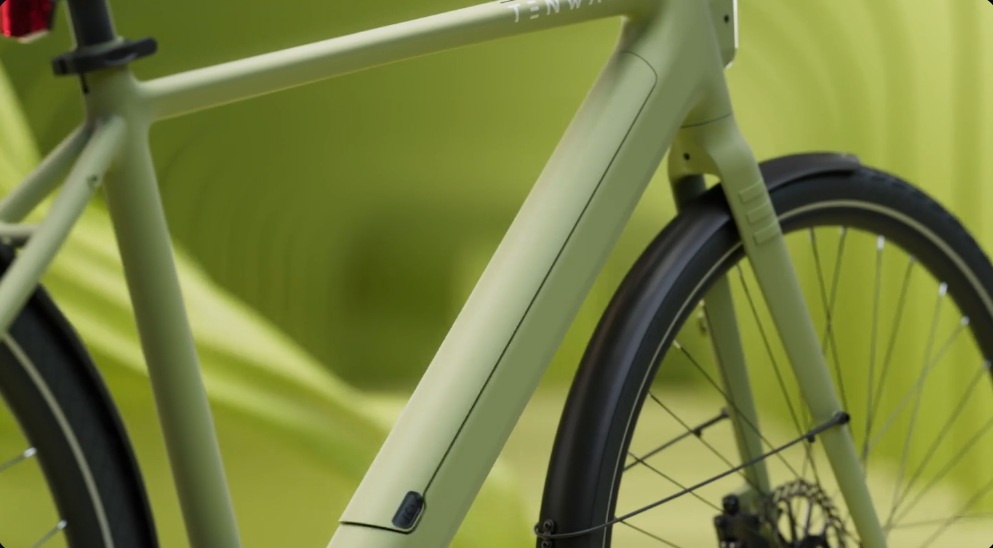
The hidden battery. Genuinely brilliant design.
It charges in situ via a port on the frame.
You can also remove it if you need to charge it separately or secure it overnight.
No bolted-on battery pack hanging off the frame like an afterthought.
It just looks like a bike.
The Gates Carbon Belt Drive
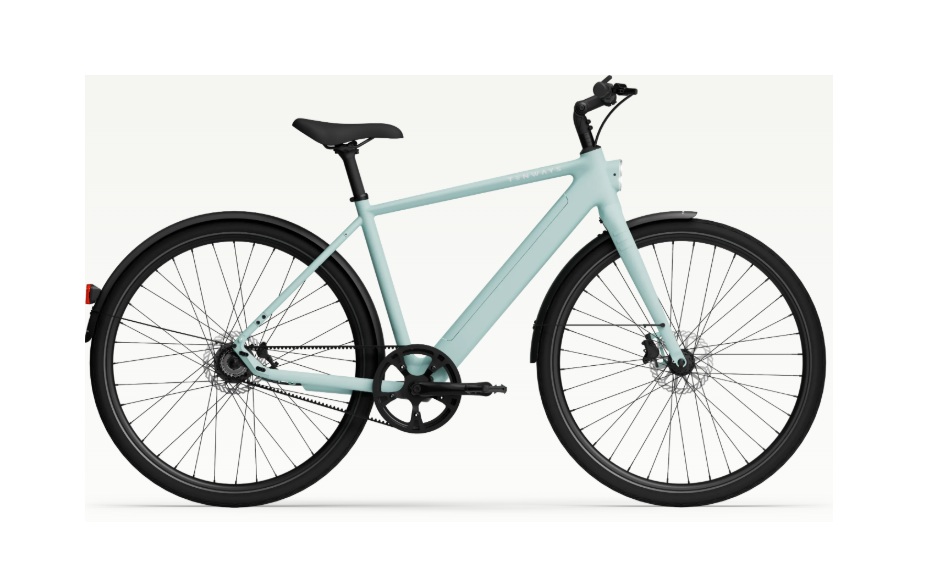
The Gates Carbon belt drive is one of the CGO600 Pro’s biggest practical advantages – and the thing most reviewers gloss over in favour of talking about the motor.
A standard chain needs cleaning, oiling, and replacing every 1,000 – 3,000km depending on conditions.
The Gates Carbon belt lasts around 30,000km with virtually no maintenance.
No chain oil on your work trousers.
No rust after a wet commute.
No standing over the bike on a Wednesday morning with a rag and a bottle of degreaser.
The CGO600 Pro is single speed, which means no derailleur to adjust, no cables to stretch, and nothing complex to go wrong when it’s hammered through a British winter.
For a daily commuter, this combination of belt drive and single speed is genuinely worth paying for.
It’s not just a nice entry on a spec sheet – it actually saves you time and money over the life of the bike.
Display and Controls
The CGO600 Pro keeps it simple – a minimal OLED display mounted on the bars that shows your speed, assist level, and battery status.
There’s no touchscreen, no Bluetooth app pairing, no navigation built in.
Some riders will want that stuff.
Most commuters won’t miss it.
What you get is a clean, clear read in all conditions – the OLED is properly legible in direct sunlight, which is more than you can say for some of the LCD panels on cheaper bikes.
The assist levels are controlled via a simple bar-mounted button.
Pick your level, press the button, ride.
That’s the whole user interface, and it works.
Pros and Cons
- ✓ Looks genuinely good. The hidden battery and clean frame design mean it doesn’t scream “e-bike” – which, depending on your workplace bike storage situation, is a real practical advantage.
- ✓ Torque sensor delivers a natural, seamless pedal feel. This is the difference between a premium ride and a budget one. The CGO600 Pro gets it right.
- ✓ Hydraulic disc brakes front and rear. Confident stopping in all conditions, including the inevitable British drizzle.
- ✓ Gates Carbon belt drive. No chain oil, no rust, no derailleur. The belt lasts around 30,000km with minimal upkeep – for a daily commuter, that’s years of maintenance-free riding.
- ✓ Lightweight at 16kg. Not featherweight, but genuinely manageable – carrying it up a flight of stairs or onto a train won’t be a daily trauma.
- ✓ Integrated lights powered by the main battery. One less thing to charge, one less thing to forget, one less thing to get nicked off the bike.
- ✓ Honest range for a commuter battery. 50 – 70km real-world is more than enough for the vast majority of UK commutes.
- ✗ No throttle. Pedal assist only – which is fine for EAPC compliance, but if you occasionally want to pull away from lights without pedalling, you won’t be doing it here. My DYU A5 has a throttle, and I use it more than I thought I would.
- ✗ No suspension. On UK roads with their creative approach to pothole management, you feel every bump. Fine for smooth cycle paths and decent tarmac; less fun on rougher surfaces.
- ✗ The price. Just over a grand for a bike from a brand that most UK consumers hadn’t heard of three years ago requires a degree of trust. The quality backs it up – but it’s a legitimate consideration.
- ✗ After-sales support can be variable. Tenways is still establishing its UK service network. If something goes wrong outside the warranty, finding a local mechanic familiar with the bike takes a bit more effort than taking a Specialized or Trek to your nearest dealer.
- ✗ Not for carrying things. No rack, no mudguards as standard (though they’re available as accessories). If you’re doing the weekly shop on this thing, you’ll need to budget for accessories or rethink your plans.
Pricing and Value
The CGO600 Pro sits at around £1,049 – £1,099 at time of writing, though pricing can shift.
Buy direct from Tenways’ website for the best price – that’s where you’ll find current stock, any active discounts, and the full colour range.
Is it good value?
Honestly, yes – with a caveat.
For what you get in terms of components – hydraulic brakes, torque sensor, Gates Carbon belt drive, integrated battery and lights – a thousand pounds is a fair price in this market.
You’d pay significantly more for equivalent spec from Specialized or Cannondale.
A monthly train season ticket in most UK cities runs £150 – £250+.
A daily commuter switching to the CGO600 Pro could break even inside six to twelve months.
If you’re commuting daily and replacing a car journey or season ticket, the CGO600 Pro pays for itself quickly.
If you’re buying it for occasional weekend rides, the value equation looks rather different.
Who This Bike Is Perfect For
- Daily urban commuters doing 5 – 20 miles each way who want to arrive looking human rather than like they’ve cycled the Pyrenees.
- Riders who care about how the bike looks – in a workplace bike shed, a city-centre lock-up, or leaning against a café window. The clean design genuinely stands out.
- Cyclists stepping up from a basic e-bike who want proper components – hydraulic brakes, torque sensor, Gates belt drive – without jumping straight to £2,500+.
- Commuters who also ride for pleasure at weekends and want one bike that works for both. It’s light enough and handles well enough to be enjoyable beyond the daily grind.
- Riders who want EAPC compliance without compromise – this is a properly road-legal 250W e-bike that doesn’t feel like it’s been hobbled to get there.
Who Should Avoid This Bike
- Riders who need a throttle. Pedal assist only – end of discussion. If that’s a dealbreaker, look elsewhere.
- Anyone tackling steep hills regularly. The motor is 250W with 40Nm torque. It handles moderate gradients fine, but serious climbs will have you doing most of the work yourself.
- Budget-conscious buyers. There are capable e-bikes at £600 – £800 – see our best e-bikes under £1,000 UK guide for options. If a thousand pounds genuinely hurts, the CGO600 Pro’s premium spec might not be the right priority right now.
- Riders who need to carry kit. No rack, no mudguards in the base configuration. Factor in accessory costs or look at a more cargo-oriented option.
Our Verdict on the Tenways CGO600 Pro Review
Look, I ride a DYU A5.
It cost me considerably less than the CGO600 Pro, it folds, and it’s got a throttle.
In some ways it’s the more practical tool for my particular situation.
So I’m not going to sit here and tell you the Tenways is the only e-bike worth considering.
But – and it’s a genuine but – the CGO600 Pro is a genuinely impressive piece of kit.
The torque sensor alone puts it in a different league to most bikes at this price.
It rides like a dream on smooth tarmac.
The hydraulic brakes are confidence-inspiring in wet weather.
And it looks proper.
Not “flashy e-bike” proper – more “this is just an elegant bicycle” proper, which is a much harder thing to pull off.
If I were commuting daily in a city, locking it outside a smart office, and wanted something that would still make me smile on a Saturday morning ride – the CGO600 Pro would be on my very short list.
It’s not perfect.
The lack of throttle and suspension will matter to some riders.
The after-sales network is still maturing.
And yes, you’re paying a premium for a brand that’s still building its UK reputation.
The fundamentals are solid.
The spec is honest.
The ride quality backs up the price.
Here’s my straight answer: if you’re commuting in a UK city on flat to moderate terrain and you want a bike that feels premium, runs maintenance-free, and doesn’t look like it belongs in a mobility catalogue – buy it.
If you’re on serious hills, need a throttle, or need something that folds onto a train – this is the wrong bike.
For everyone else: stop deliberating.
The CGO600 Pro is the best sub-£1,100 commuter e-bike I’ve come across.
| Range & Battery | 8/10 |
| Build Quality | 9/10 |
| Value for Money | 8/10 |
| Ride Comfort | 7/10 |
| UK Suitability | 9/10 |
| Overall | 8.4/10 |
Check Current Price on Tenways ->
Frequently Asked Questions
Is the Tenways CGO600 Pro road legal in the UK?
Yes.
The CGO600 Pro is fully EAPC compliant – 250W motor, 25km/h (15.5mph) speed limit, pedal assist only.
That means you can ride it on UK roads and cycle paths without registration, insurance, or a licence.
No need to do anything special – just ride it.
What is the real-world range of the Tenways CGO600 Pro?
Tenways claim up to 100km, which is their best-case scenario.
Real-world UK owner reports put it consistently at 50 – 70km in mixed conditions.
Heavier riders, hillier routes, or higher assist levels will bring that closer to 40 – 50km.
Still more than sufficient for most commutes – just don’t believe the headline number uncritically.
Does the Tenways CGO600 Pro have a throttle?
No.
It’s pedal assist only.
The motor engages when you pedal and delivers assist in proportion to your effort via a torque sensor.
There is no throttle function.
If you need a throttle for pulling away from lights or tackling hills without pedalling, this isn’t the bike for you.
Is the CGO600 Pro single speed?
Yes.
The CGO600 Pro is single speed with a Gates Carbon belt drive instead of a traditional chain and gears.
This keeps the bike low-maintenance and clean-looking.
If you want gears, look at the higher-spec Tenways CGO800S.
How heavy is the Tenways CGO600 Pro and can I take it on a train?
It weighs 16kg – manageable but not light.
Most UK train operators permit non-folding bikes at off-peak times on specific services, though policies vary.
It’s worth checking your specific operator’s rules.
For daily train commuting with the bike, a lighter folding e-bike might be more practical.
Related Articles
- Tenways CGO800S Review: Is the Belt Drive Worth It? – the premium model with gears, for serious commuters
- Best Electric Bikes Under £1000 UK 2026 – Tested by a Real Owner – if your budget is under £1,000, start here