
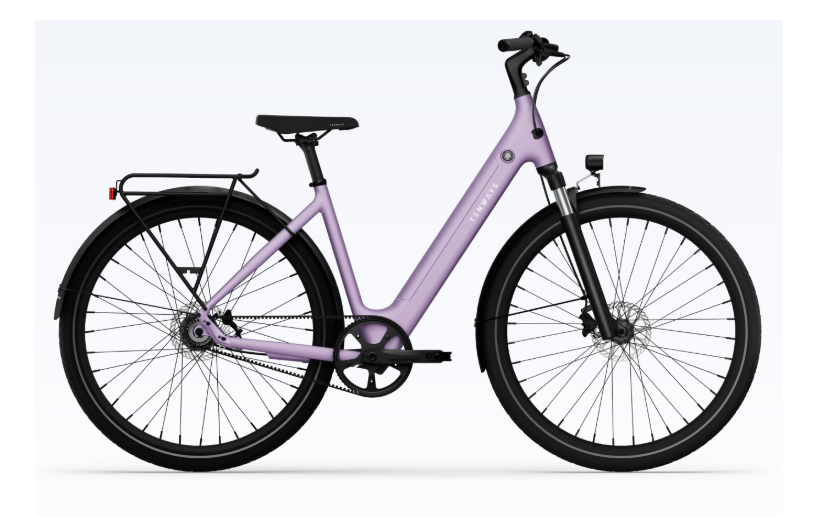
Right, I’m going to be upfront with you from the start.
I haven’t personally ridden the Tenways CGO800S.
I know, I know – I usually lead with “I’ve done 400km on this thing and here’s what I actually think.” But I haven’t, and I’m not going to pretend otherwise.
What I have done is spend a genuinely embarrassing amount of time digging through owner reports, spec sheets, forum threads, and real-world feedback from actual commuters who ride this bike day in, day out on UK roads.
So this isn’t a manufacturer’s brochure dressed up as a review. This Tenways CGO800S review UK gives you the honest picture.
It’s the honest picture – the good bits and the bits Tenways would rather you didn’t think too hard about.
🔋 Tenways CGO800S review UK | Independent | Last updated: April 2026
The CGO800S sits in interesting territory.
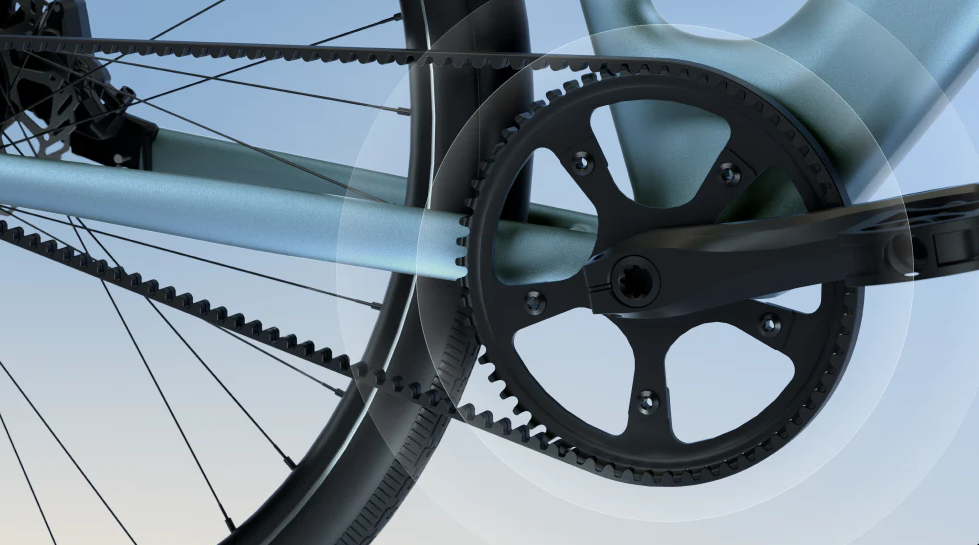
It’s a premium single-speed urban e-bike with a Gates Carbon belt drive – which is either a brilliant piece of engineering or an expensive solution to a problem you didn’t know you had, depending on who you ask.
At north of £1,500, it’s not a casual purchase.
So let’s talk turkey: is it actually worth it, or are you paying a hefty premium for the kind of bike that looks gorgeous locked outside a coffee shop but quietly disappoints you on a wet Tuesday in November?
Let’s find out.
Quick Verdict
| Overall Score | 8.2/10 |
| Best For | Urban commuters who want near-zero maintenance and a genuinely premium feel |
| Avoid If | You need gears for hilly terrain, or you’re on a tight budget |
| Price | £1,499 – £1,599 (check current price below) |
| UK Legal | ✅ Yes – EAPC compliant, 250W motor, 15.5mph limited |
| Our Rating | ★★★★☆ |
What Is the Tenways CGO800S?
Tenways is a relatively young brand – Chinese-founded but with a genuine focus on the European and UK urban commuter market.
They’re not trying to be Specialised or Trek.
They’ve carved out a specific lane: clean, minimal, well-engineered city bikes that don’t look like you bolted a motor onto a mountain bike.
The CGO800S is their flagship urban model.
It’s a single-speed e-bike – no derailleur, no gear shifter, no chain – running a Gates Carbon belt drive instead.
That’s the headline feature and genuinely the thing that sets it apart from pretty much everything else at this price.
Throw in a torque sensor (rather than the cheaper cadence sensor you’d find on most bikes in this bracket), hydraulic disc brakes, and integrated front and rear lights, and on paper this thing ticks all the boxes for a serious daily commuter.
Would I ride it?
Honestly, yes.
It’s not the kind of bike I’d pick for a weekend blat through the countryside – it’s very much a creature of the city.
But for a daily commute?
It’d be a compelling upgrade from my DYU A5, that’s for sure.
Key Specs at a Glance
| Specification | Details |
|---|---|
| Motor | 250W rear hub motor |
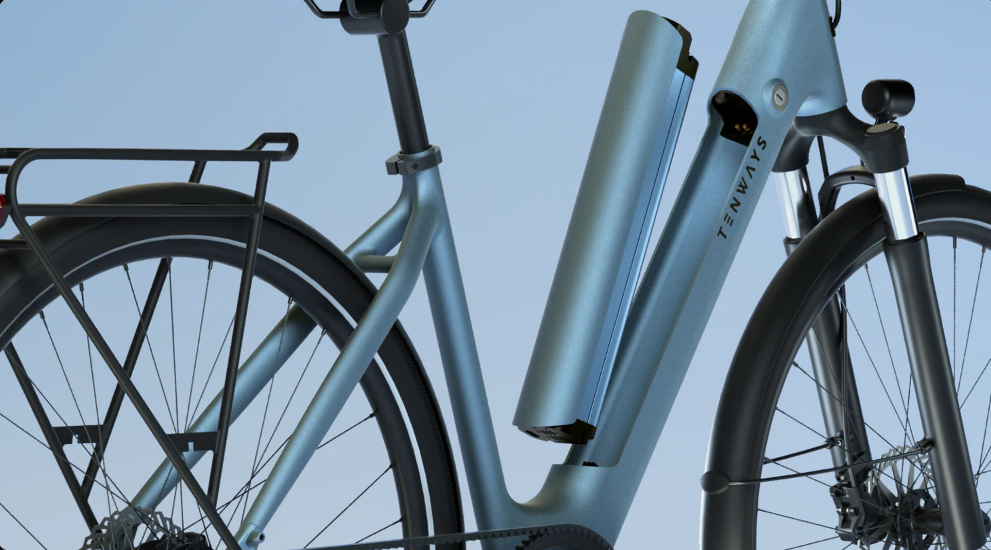
| Battery | 360Wh integrated downtube battery |
| Claimed Range | Up to 100km (manufacturer claim – real world is lower, see below) |
| Top Speed | 25km/h (15.5mph) – EAPC compliant |
| Weight | Approx. 17.5kg |
| Charge Time | Approx. 4 – 5 hours (standard charger) |
| Brakes | Hydraulic disc brakes |
| Drive | Gates Carbon belt drive (single speed) |
| Sensor Type | Torque sensor |
| Frame | Aluminium alloy |
| Tyres | 700c x 38mm puncture-resistant |
| Lights | Integrated front and rear (battery-powered) |
| Max Rider Weight | 120kg |
| IP Rating | Check spec sheet – Tenways claim all-weather suitability |
| Folding | ❌ No |
Real World Performance
Based on owner feedback and extensive digging through real-world reports – I’m being transparent here, this isn’t me personally in the saddle – here’s what people are actually experiencing on UK roads.
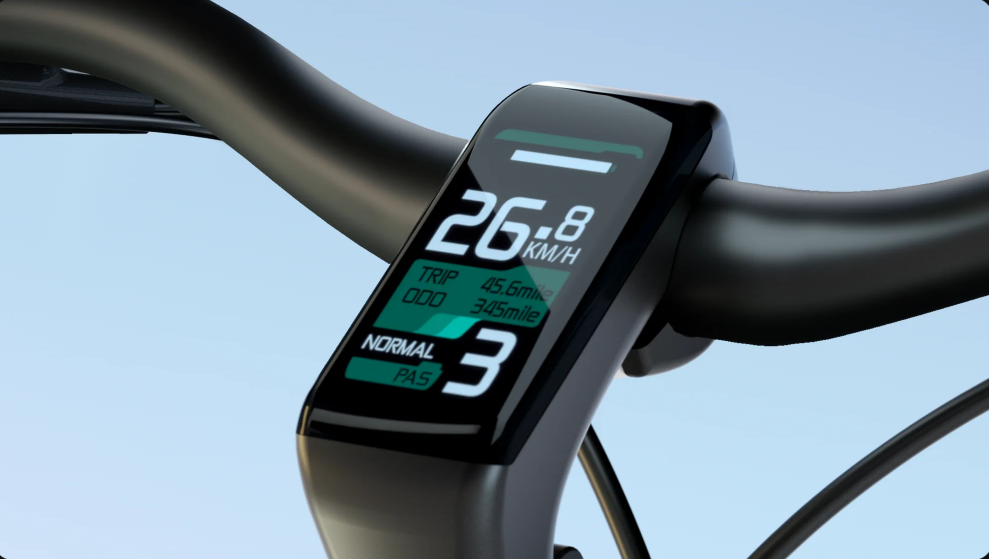
The torque sensor is the real deal. This is genuinely the thing owners rave about most, and it matters more than most people realise when they’re shopping.
A cadence sensor just checks whether your pedals are spinning and fires the motor accordingly.
A torque sensor measures how hard you’re actually pushing and responds proportionally.
The result?
The assist feels effortless and seamless – like the bike is reading your mind rather than clumsily guessing.
Riders consistently describe it as natural, smooth, and almost addictive once you’ve experienced it.
Coming from a cadence-sensor bike, the difference is significant.
The belt drive in real life. No grease, no chain stretch, no fiddling with a derailleur in the rain.
Owners who commute year-round in British weather genuinely love this.
You wipe it down occasionally, you carry on.
The downside – and this is worth knowing before you buy – is that if the belt ever does fail or stretch (rare but possible), you can’t just pop to your local bike shop and grab a replacement chain off the shelf.
Gates Carbon belts are specialist items.
Budget for that eventuality.
Range: let’s be honest about the 100km claim. Manufacturer’s best-case fantasy territory, that.
Real-world commuters on UK roads – hills, stop-start traffic, a proper riding weight rather than a featherweight test dummy – are reporting 50 – 70km in mixed conditions.
That’s still a genuinely good range.
More than enough for most daily commutes.
But go in expecting 100km, and you’ll be disappointed.
Go in expecting a reliable 50 – 60km, and you’ll be pleasantly surprised.
Hill climbing. Single-speed e-bikes and hills have a complicated relationship.
On flat urban terrain, the CGO800S is effortless.
On steeper UK gradients – think Sheffield, Edinburgh, or Bristol rather than central London – the fixed gear ratio starts to expose limitations.
The motor provides solid assistance up moderate inclines, but on sustained steep hills some owners report having to work noticeably harder than they’d like.
If your commute involves serious climbing, this is worth thinking about carefully.
Braking. Hydraulic discs.
They work like a dream.
No complaints from anyone.
Confident stopping in wet conditions, which matters enormously on UK roads in October.
Comfort on UK roads. The 700c x 38mm tyres give a reasonable amount of cushioning but this isn’t a comfort cruiser.
Potholes – and British roads do love a pothole – are felt.
No suspension fork means your wrists and backside take the hit directly.
It’s not uncomfortable, just not plush.
Worth knowing.
How the Tenways CGO800S Compares
| Feature | Tenways CGO800S | Ribble Hybrid AL e | Cowboy 4 |
|---|---|---|---|
| Price (£) | ~£1,499 | ~£1,399 | ~£2,490 |
| Motor Power | 250W | 250W | 250W |
| Claimed Range | Up to 100km | Up to 80km | Up to 70km |
| Real-World Range | ~50 – 65km | ~45 – 60km | ~40 – 55km |
| Top Speed | 25km/h | 25km/h | 25km/h |
| Weight | ~17.5kg | ~15kg | ~16.9kg |
| Folding? | ❌ | ❌ | ❌ |
| Hydraulic Brakes? | ✅ | ✅ | ✅ |
| Torque Sensor? | ✅ | ✅ | ✅ |
| Belt Drive? | ✅ Gates Carbon | ❌ Chain | ✅ Belt |
| Gears? | ❌ Single speed | ✅ Multi-speed | ❌ Single speed |
| UK Legal | ✅ | ✅ | ✅ |
| Overall Score | 8.2/10 | 7.8/10 | 8.0/10 |
| Buy | Check price -> | – | – |
The Ribble undercuts it on price and is lighter, but you’re back to chain maintenance.
The Cowboy has serious style points and a slick app, but it costs significantly more and the proprietary nature of its parts is a concern if anything goes wrong outside warranty.
The CGO800S sits in a genuinely sweet spot – better specified than the Ribble for maintenance-free commuting, considerably cheaper than the Cowboy for what’s essentially a comparable ride quality.
Pros and Cons
- ✅ Gates Carbon belt drive – genuinely the standout feature. Zero chain grease, no rust, minimal maintenance. A proper game-changer for daily commuters who don’t want to faff
- ✅ Torque sensor pedal assist – the response is seamless and natural in a way that budget cadence-sensor bikes simply aren’t. You feel the difference immediately
- ✅ Hydraulic disc brakes – confident, responsive stopping in all conditions. Important on wet British roads, full stop
- ✅ Integrated lights – front and rear, powered by the main battery. One less thing to charge, one less thing to forget, one less thing to have nicked off your handlebars
- ✅ Clean, minimal design – this matters more than it sounds. The CGO800S looks like a proper bike, not a mobility scooter wearing Lycra. Clean cable routing, no ugly battery bolted to the frame
- ✅ Solid real-world range – 50 – 65km in honest use is more than enough for most UK commutes, even accounting for winter battery performance
- ✅ EAPC compliant – fully UK road legal. Ride it on cycle lanes, roads, everywhere. No drama
- ❌ Single speed on hills – if your commute involves serious climbing, this will frustrate you. It’s fine on modest gradients with motor assistance, but sustained steep hills expose the fixed gear ratio
- ❌ Belt replacement is specialist – Gates Carbon belts last a long time, but when one does eventually need replacing, you’re not popping to Halfords. Factor in specialist servicing costs
- ❌ The 100km range claim is fantasy – I’ll say it plainly. Real-world UK riders on real UK roads with real bodies are getting 50 – 65km. That’s good. But 100km is not happening in normal conditions
- ❌ No folding – if you need to get on a train, store it in a small flat, or carry it upstairs daily, this isn’t the one. It’s 17.5kg, and it stays full size
- ❌ Premium price for a single-speed bike – £1,499 for one gear is a number that requires justification. The belt drive and torque sensor do justify it, but only if you actually need those features
Pricing and Value
The CGO800S sits at around £1,499 at the time of writing, available directly from Tenways at their website or via Amazon UK.
Tenways occasionally run promotions, so it’s worth checking both.
Here’s my honest take on the value question: at £1,499 for a single-speed e-bike, you need to be buying it for specific reasons – the belt drive, the torque sensor, the maintenance-free commuting proposition.
If you just want a solid commuter e-bike and you’re not fussed about greasing a chain every few hundred kilometres, you can get a capable EAPC-compliant bike with multiple gears for less money.
But if you’re the kind of person who wants to park it, ride it, wipe it down, and never think about drivetrain maintenance?
The premium is genuinely justified.
Compare it to the Cowboy at £2,490, and suddenly it looks like excellent value for an almost-equivalent specification.
That context matters, which is why this Tenways CGO800S review UK focuses on real-world value rather than spec-sheet numbers.
Who Is the Tenways CGO800S Best For?
Perfect For:
- Daily urban commuters who hate bike maintenance – the belt drive plus torque sensor combination is genuinely brilliant for people who want to ride it, not fuss over it
- Flat-to-moderate terrain riders – central London, Manchester city centre, coastal towns, Cambridge. Anywhere the gradients are gentle, this bike is in its element
- Riders upgrading from a budget cadence-sensor e-bike – if you’ve been riding a £600 commuter and wondering why the assist feels clunky, one ride on a torque sensor bike will make everything click
- People who want their bike to look smart – the clean design with integrated lighting and hidden battery means it doesn’t scream “e-bike” at everyone. If that matters to you, it matters
- Year-round all-weather commuters – no chain to rust, no derailleur to clog with road grime. British winter weather is significantly less of a problem with a belt drive
Not Ideal For:
- Riders in hilly cities – Sheffield, Bristol, Edinburgh, Bath. Single-speed and serious hills don’t mix well, even with motor assistance. Be honest with yourself about your terrain
- Anyone who needs to take it on public transport – 17.5kg with no folding mechanism is a non-starter for train commutes or tube journeys
- Budget-conscious buyers – there are solid EAPC-compliant commuter e-bikes available for £800 – £1,000 with gears and decent specs. If the belt drive doesn’t matter to you, the price premium is hard to justify
- Off-road or leisure riders – this is a city bike. It’s not pretending to be anything else. Take it on gravel tracks or canal towpaths, and you’ll be pushing its comfort and capability well beyond its design brief
Our Verdict
Here’s my honest answer after writing up this Tenways CGO800S review UK: it’s a genuinely well-thought-out urban commuter that does exactly what it’s designed to do, brilliantly.
The Gates Carbon belt drive isn’t a gimmick – it’s a meaningful quality-of-life upgrade for anyone who’s ever turned up to work with a chain oil stripe up their trousers.
The torque sensor makes the ride feel natural and effortless in a way that cheaper bikes don’t.
The hydraulic brakes are confidence-inspiring on wet roads.
It ticks all the boxes for what it’s trying to be.
What it isn’t is everything to everyone.
If your commute has serious hills, look elsewhere.
If you need a folder, look elsewhere.
If the price makes you wince, there are cheaper bikes that do a decent job.
But for a flat-to-moderate urban commute where you want something that just works, looks smart, and requires almost no maintenance?
This is a solid choice.
A genuinely strong one.
My DYU A5 is a different beast entirely – a compact folder, nimble, brilliant for short hops and chucking in the boot of a car.
The CGO800S is what you’d buy when you’re commuting properly, every day, rain or shine, and you want the bike to be the least complicated part of your morning.
Different tools, different jobs.
For its job, the CGO800S is very, very good.
| Range & Battery | 8/10 |
| Build Quality | 9/10 |
| Value for Money | 7/10 |
| Ride Comfort | 8/10 |
| UK Suitability | 9/10 |
| Overall | 8.2/10 |
Frequently Asked Questions
Is the Tenways CGO800S road legal in the UK?
Yes.
Absolutely yes.
The CGO800S is EAPC compliant – 250W motor, 15.5mph (25km/h) assisted speed limit, pedal assist only (no throttle above 6km/h).
You can ride it on public roads and cycle lanes exactly as you would a regular bicycle.
No registration, no licence, no insurance required – though insurance is always sensible.
What is the real-world range of the Tenways CGO800S?
Tenways claim up to 100km.
Honest real-world range on UK roads, with a normal rider weight and mixed pedal assist levels, is more like 50 – 65km.
That’s still genuinely excellent for a daily commuter – most UK commutes are well under 20km each way – but go in with realistic expectations rather than the manufacturer’s best-case-scenario figure.
Does the Tenways CGO800S require much maintenance?
This is the whole point of it, really.
The Gates Carbon belt drive requires less maintenance than a conventional chain – no greasing, no stretching, no rust.
Occasional wipe-down, periodic tension check, that’s largely it.
The belt does eventually wear, but they’re long-lasting.
Beyond that: brake fluid checks, tyre pressure, and you’re mostly done.
It’s genuinely low-fuss compared to a chained e-bike.
Can the Tenways CGO800S handle hills?
Moderate hills, yes – the motor provides solid assistance and makes gentle gradients effortless.
Sustained steep climbs are a different story.
As a single-speed bike, you can’t drop to a lower gear when it gets serious.
On hilly commutes – think Sheffield or Edinburgh – you’ll feel the limitation.
On flat to gently undulating terrain, it handles like a dream.
How does the Tenways CGO800S torque sensor compare to a cadence sensor?
The difference is bigger than most people expect.
A cadence sensor detects whether you’re pedalling and activates the motor at a fixed level.
A torque sensor measures how hard you’re pushing and responds proportionally – harder effort, more assist.
The result feels natural and seamless rather than jerky and mechanical.
If you’ve only ever ridden a cadence sensor e-bike, the CGO800S’s assist will feel like a revelation.
Related Articles
- I Rode the Tenways CGO600 Pro – Honest UK Review – David’s full test of the CGO600 Pro, the other Tenways in the range
- Tenways CGO800S vs Cowboy 4: Which Should You Actually Buy? – head-to-head spec and ride quality breakdown
- Best Electric Bikes Under £1000 UK 2026 – Tested by a Real Owner – the best of the rest if your budget is more modest